BPAFFC Holds Splendid Beijing Central Axis, Joyful Chinese New Year─2026 Spring Festival Gala for International Students in Beijing
时间:2026-03-06 15:37:02
The BPAFFC held the Splendid Beijing Central Axis, Joyful Chinese New Year─2026 Spring Festival Gala for international students in Beijing on February 10, the 23rd day of the last month on the Chinese lunar calendar, which marks Xiaonian, or the Little New Year. Nearly 60 international students from 35 countries across the world came together for the festive celebrations. Amidst the festive atmosphere, they took the opportunity to delve deeper into the Beijing Central Axis.
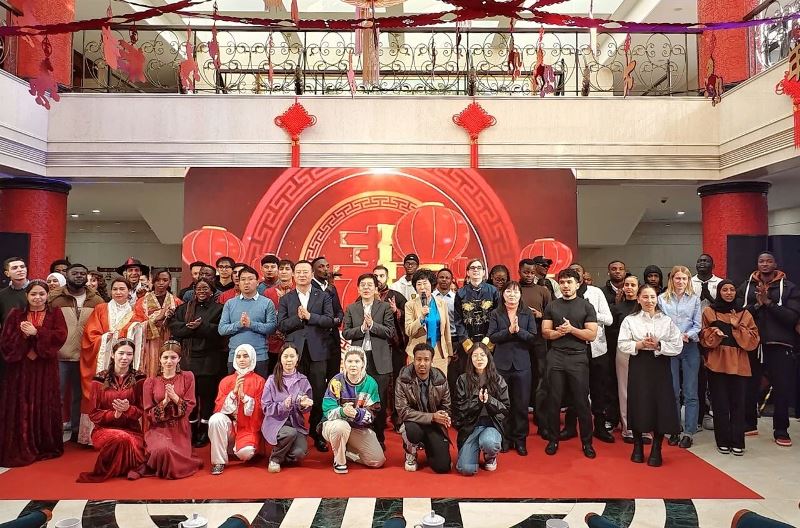
The event was hosted by the BPAFFC, with strong support from Beijing International Chinese College, the Beijing Municipal Cultural Heritage Bureau, the Office for the Nomination and Conservation of Beijing Central Axis, China University of Geosciences (Beijing), Capital Medical University and Beijing University of Civil Engineering and Architecture. Mr. Wang Yu, Executive Vice President of the BPAFFC, delivered a speech. Mr. Jiao Yutong, Vice President of the BPAFFC, and Ms. Li Jie, President of Beijing International Chinese College, attended the event.
The event kicked off with a fun quiz on the history and heritage of the Beijing Central Axis, which instantly enlivened the atmosphere, giving the students a deeper understanding of Beijing’s urban layout and its rich historical and cultural heritage. The talent show was a big highlight of the event. International students presented folk dances of Turkmenistan and Tai Chi fan practices, and affectionately recited classical Chinese poems such as The First Day of the Year and Snow on New Year’s Eve. The stage came alive with a blend of Chinese and foreign cultures, drawing wave after wave of applause.
Various traditional crafts experience zones were packed with participants, who tried their hand at making jiaozi (Chinese dumplings) and Tanghulu (candied fruit skewers), painting the iconic Beijing clay figurine Tu’er Ye (Lord Rabbit), rubbing woodblock New Year prints, writing auspicious calligraphy, and donning traditional Chinese attire. The participants eagerly got hands-on. Under the guidance of instructors, they shaped dumplings like ingots, threaded bright red hawthorns onto skewers, painted vibrant colors on Tu’er Ye figurines, and rubbed New Year prints symbolizing good fortune. Though unpracticed, they were immersed in laughter and joy. Through these hands-on experiences, they came to appreciate the Chinese New Year culture, which is about reunion, festive cheer, and aspirations for a better life.