Facilitating Practical Cooperation, Expanding Two-Way Investment – BPAFFC co-hosts China-Uganda Economic and Trade Cooperation Salon
时间:2025-12-15 09:56:24
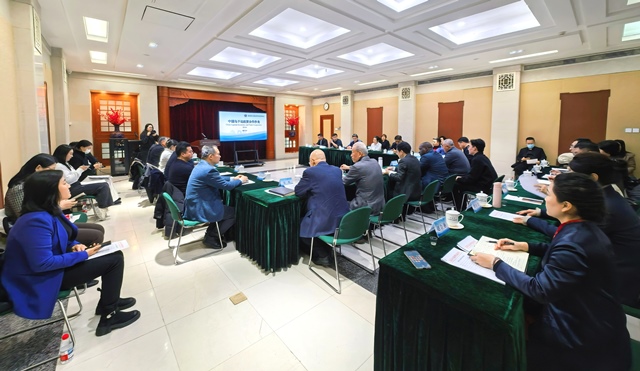
On December 9, 2025, the BPAFFC hosted the China-Uganda Economic and Trade Cooperation Salon jointly with the Embassy of the Republic of Uganda in Beijing and the Federation of Chinese Associations in Uganda. The salon was intended to implement the Partnership Action for Trade Prosperity proposed by President Xi Jinping at the Beijing Summit of the Forum on China-Africa Cooperation (FOCAC) in 2024 and to expand two-way investment and cooperation between China and Uganda. Present at the event were representatives from the Beijing Municipal Bureau of Culture and Tourism, the Beijing Federation of Industry and Commerce, the Beijing Center for International Trade in Services, BAIC Group, as well as 24 enterprises and chamber of commerce.
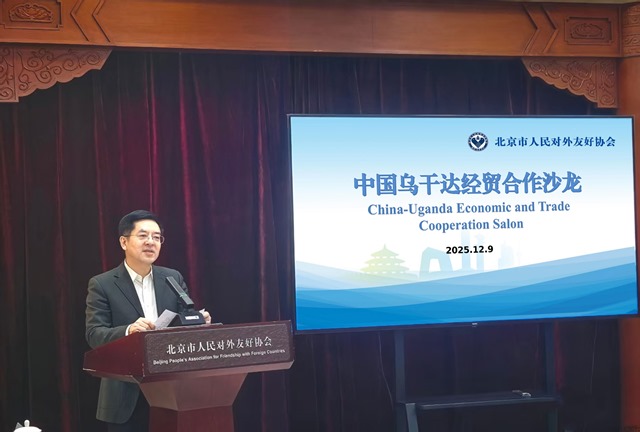
Wang Yu, Party Secretary of the BPAFFC, noted that Uganda, located in East Africa, has maintained a comprehensive strategic cooperative partnership with China, and is an important partner in the Belt and Road Initiative. The two countries enjoy broad cooperation prospects in agricultural modernization, green energy, digital economy, and other areas. As a Beijing-based agency committed to promoting non-governmental friendship, the BPAFFC is ready to build bridges for people-to-people exchanges and practical cooperation between China and Uganda. As China is drawing up a new blueprint for the 15th Five-Year Plan period and expanding high-standard opening up, the BPAFFC will work to provide new momentum for non-governmental friendship between China and Uganda, with a focus on facilitating economic and trade cooperation.
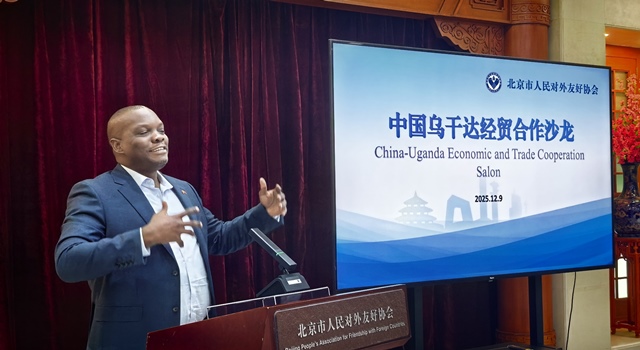
Okurut Emmanuel, Immigration Attaché at the Embassy of the Republic of Uganda in Beijing, introduced in detail Uganda’s national conditions, business environment, and investment policies. He emphasized that Uganda, often hailed as the “Pearl of Africa,” has a predominantly young population and is abundant in natural resources. The country also enjoys relative political stability and an improving business environment, with significant investment opportunities in sectors such as agriculture, renewable energy, information and communications technology, and tourism. He warmly welcomed Chinese enterprises to invest and do business in Uganda, highlighting that the Ugandan government has introduced a range of incentives, including tax exemptions and preferential policies in special economic zones.
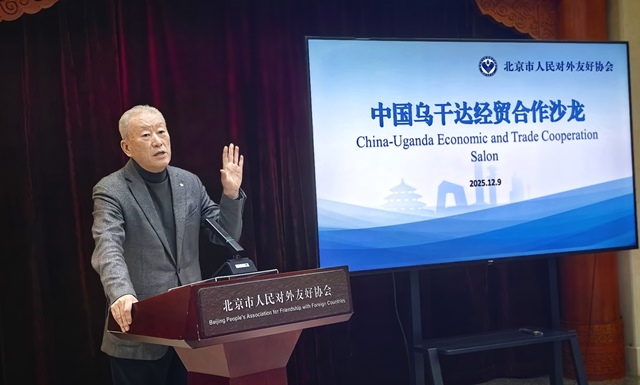
Speaking from the perspective of China-Uganda relations, Zhao Yali, Vice Chair of the China National Committee for Pacific Economic Cooperation and former Chinese Ambassador to Uganda, gave an overview of the state of Chinese investment in Uganda and provided targeted recommendations for Beijing-based enterprises considering expansion into the Ugandan market.
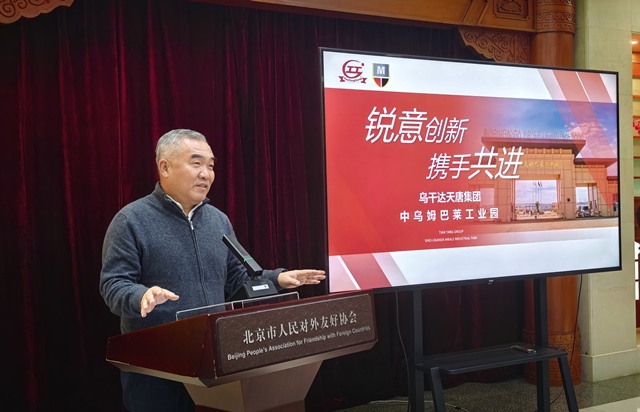
On behalf of enterprises actively engaged in Belt and Road cooperation, Zhang
Zhigang, President of the Federation of Chinese Associations in Uganda and Chairman of Tiantang Group, elaborated on Uganda’s investment environment and prospects for cooperation. Based on two decades of experience operating in Africa, he introduced Tiantang Group’s industrial footprint across the continent and its strategic directions for future cooperation. He encouraged Beijing-based enterprises to seize opportunities and expand their cooperation with Africa.
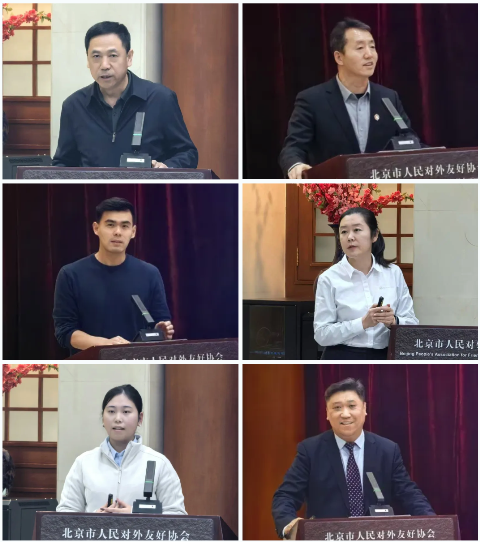
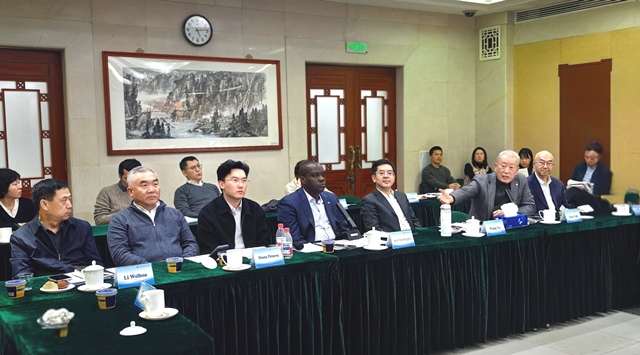
Representatives from 11 organizations addressed the salon, including those from the Haidian District People’s Association for Friendship with Foreign Countries of Beijing Municipality, Beijing Yougo World International Travel Service Co., Ltd., China Sciences MapUniverse Technology Co., Ltd., Foton Motor International Co., Ltd., Beijing WOD Chenlong Biotechnology Co., Ltd., and Beijing OKEST Life Technology Co., Ltd. The speakers highlighted their enterprises’ strengths and expressed interests in cooperating with Uganda across various sectors, such as culture and tourism, technology R&D, biopharmaceuticals, machinery manufacturing, and infrastructure construction. The participating enterprises engaged in lively discussions and raised questions on investment policies, market access, government support, fund settlement, and labor costs, among others. All of their questions were met with detailed and meticulous responses from Zhang Zhigang, Okurut Emmanuel, and Zhao Yali.
The salon represents a concrete action taken by the BPAFFC to support Beijing’s high-standard opening up and China-Uganda economic and trade cooperation. The BPAFFC will continue to give full play to its role as an important bridge and build more platforms for economic and trade exchanges. It will contribute more to deepening the China-Uganda comprehensive strategic cooperative partnership and building an all-weather China-Africa community with a shared future for the new era.